Is Liquid Membrane Suitable For Roofs?
Fluid applied roofing—often called liquid membrane roofing—has become a go-to solution for building owners who want a watertight, reflective, and lower-disruption option for restoring an aging roof. In Rockwall, TX, where UV exposure is high and summer storms can push wind-driven rain under seams, the right membrane can buy years of service from an existing system. Still, liquid products are not a cure-all. Suitability depends on roof condition, slope, drainage, and the membrane chemistry. This article lays out how an experienced contractor evaluates a roof for fluid application, what to expect from the process, and when replacement is the better call.
What “Liquid Membrane” Means in Practice
Fluid applied roofing is a resin-based coating or reinforced membrane that crews roll, brush, or spray onto an existing roof. Once it cures, it forms a continuous, monolithic layer with no joints or seams. Common chemistries include acrylic, silicone, polyurethane, and PMMA (polymethyl methacrylate). Each behaves differently in North Texas weather.
Acrylic coatings reflect heat well and hold their color, but they soften under ponding water. Silicone tolerates standing water and bonds well to many substrates, though it attracts dust which can dull reflectivity. Polyurethane builds strong impact resistance over rough surfaces and takes foot traffic better than acrylic, yet it needs careful UV protection. PMMA cures fast and accepts reinforcement fleece, which makes it attractive for detailed work and limited weather windows.
In Rockwall, the most versatile systems for flat and low-slope roofs tend to be silicones and PMMA-based liquid membranes. Acrylic can still work on positive-slope roofs with clean drainage. Choice comes down to the actual deck, condition, and water behavior across the roof.
Roof Types That Pair Well With Fluid Applied Roofing
Single-ply membranes like TPO, PVC, and EPDM are strong candidates. If the seams are tired and the field is weathered but the insulation is dry and the deck is sound, a fluid membrane can extend service life 10 years or more, sometimes 15 to 20 with proper prep and reinforced details. Factory metal roofs in the Rockwall area also respond well to liquid systems that seal fasteners, reflash penetrations, and protect against thermal movement.
Modified bitumen and built-up roofs can take fluid membranes if the surface is stable and free of blisters that telegraph. Granulated caps work after a thorough cleaning and spot repairs. Over spray foam, silicone has a long track record in Texas, assuming the foam is not UV-degraded or waterlogged.
Tile and asphalt shingles are not good candidates. The texture, movement, and venting needs make liquid application unreliable there. Wood roofs are out for the same reasons.
What Must Be True Before a Liquid System Makes Sense
A contractor checks three fundamentals: moisture, movement, and drainage. First, trapped water ruins adhesion. If core samples show wet insulation or saturated fiberboard, the wet areas need replacement before any coating goes on. Infrared scans help locate these zones at dusk when the roof radiates heat unevenly.
Second, decks that flex excessively or roofs with serious structural movement need more than a coating. Movement cracks coatings at transitions, corners, and long seams. For those areas, a reinforced liquid system or targeted rebuilding may be required. Third, drainage matters. Ponding water longer than 48 hours limits acrylics and can magnify minor defects on any system. In Rockwall, after a heavy storm, a roof should drain down to shallow birdbaths, not hold inch-deep ponds. If water stands, adding tapered insulation or new drains may be part of the scope.
Age alone does not disqualify a roof. Many 15-year-old single-ply roofs accept a fluid-applied restoration that delivers another service cycle. The deciding factor is condition, not calendar.
Local Weather Pressures in Rockwall, TX
North Texas sees long, hot summers with intense UV. Reflective liquid membranes keep rooftop temperatures lower—often 50 to 70 degrees cooler than dark surfaces. That helps reduce thermal cycling and can trim cooling loads for buildings with poor attic ventilation or minimal roof insulation. Storms bring hail, gusty winds, and wind-driven rain. Liquid membranes shine at closing old fastener holes in metal and sealing around equipment, but they are not armor plating. For hail-prone facilities in Rockwall County, a high-solids silicone or a polyurethane base with ceramic or granule surfacing can improve impact resistance.
Winter is generally mild, yet freeze-thaw occurs. Joints and penetrations that receive fleece-reinforced liquid flashing resist those cycles better than bare coatings. Contractors schedule application windows around temperature and dew point. Curing times change sharply between October and April, and overnight https://scr247.com/services/liquid-applied-roofing-dfw/ dew can mark a fresh coating if the spec and timing are off.
What a Professional Assessment Looks Like
A proper evaluation starts with a walkover and photo documentation. The contractor checks membrane seams, penetrations, parapet caps, gutters, and the field for cracks, alligatoring, and prior repairs. They pull a few cores to check insulation and deck condition. On metal, they test fastener torque and note oxidation. On single-ply, they check for pull-away at edges and measure thickness in worn lanes.
They also map drainage after a rain or with a controlled water test. In Rockwall, many buildings have slight deck sag from past ponding or HVAC weight. That is manageable with the right liquid system and targeted slope fixes, but it must be planned. Finally, adhesion tests with small patches confirm the chosen chemistry will bond to the existing surface after cleaning and primer.
Advantages That Matter to Building Owners
Fluid applied roofing stands out for speed and minimal disruption. Crews can restore a 30,000-square-foot roof in days, not weeks, with fewer odors and less tear-off noise. Businesses along Goliad Street or near Lake Ray Hubbard often keep operations open during application. Since the new membrane weighs little compared to an overlay, it imposes minimal load on older structures.
The simplicity of a monolithic surface reduces points of failure. Seams, laps, and thousands of fasteners become a continuous barrier. Reflectivity can drop rooftop heat loads, which helps HVAC run time. Many systems qualify for 10- to 20-year manufacturer warranties when installed to spec, though the terms depend on thickness, reinforcement, and documented prep.
Costs vary by chemistry and prep needs. As a rough local range, Rockwall owners see fluid restorations from $3 to $7 per square foot. Full tear-off and replacement commonly land higher, often $9 to $15 per square foot depending on the new system. Where insulation stays dry and the deck is sound, fluid applied roofing often delivers the best cost-per-year value.
Where Liquid Membranes Fall Short
If a roof leaks because of structural damage, rotted decking, or saturated insulation, coatings cannot solve the root problem. In those cases, partial tear-off and rebuild are smarter than sealing over a flawed base. Acrylic products lose life in ponding areas. Silicone’s dirt pickup lowers solar reflectance over time, which means washdowns or re-topcoats to keep energy performance. Over rough surfaces with many blisters, a non-reinforced coating can look smooth at install then mirror those defects a season later. Fleece-reinforced liquid roofing handles that better but raises cost.
Some owners want a “one and done” solution. Liquid systems are more like a service plan. They excel as part of a maintenance cycle with periodic inspections, sealed fasteners, and re-topcoat at the end of the warranty. That plan yields a long life at a lower total cost but it is still a commitment.
What the Process Looks Like on a Rockwall Project
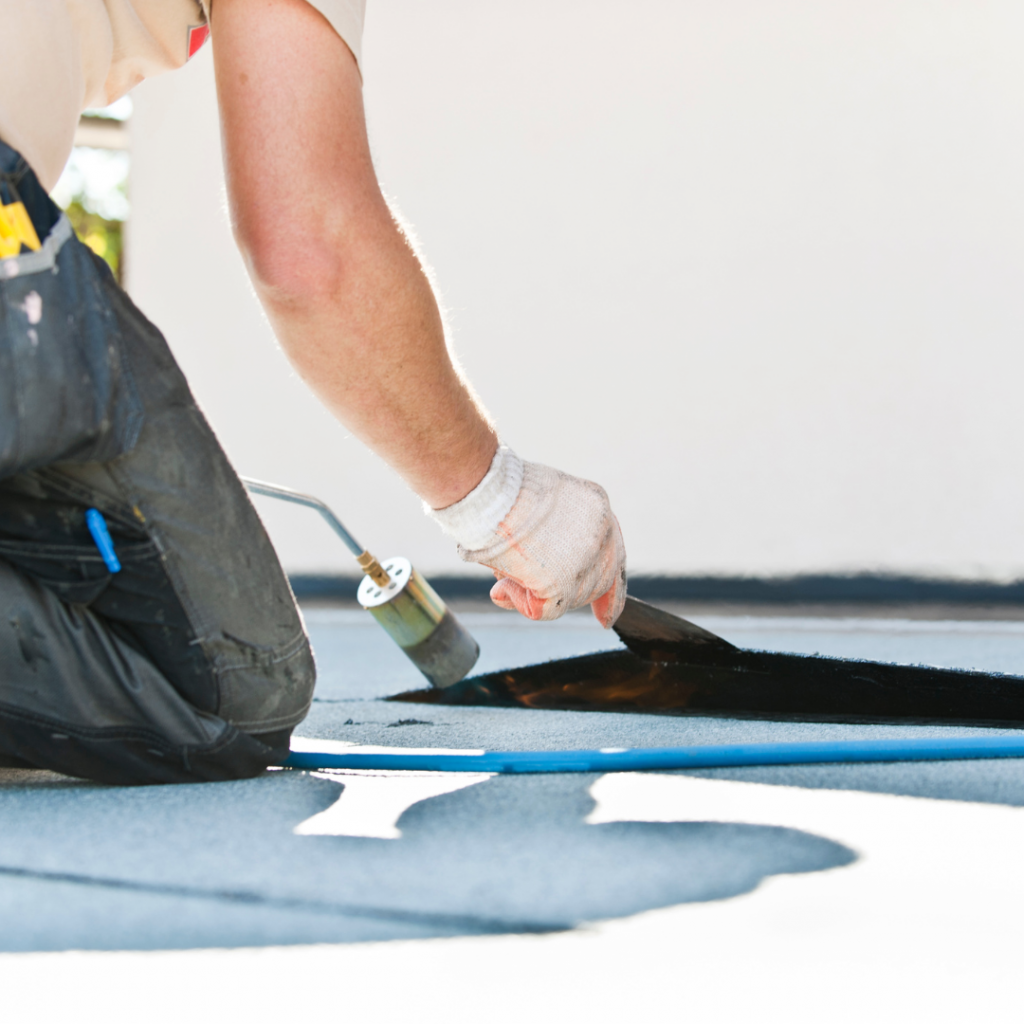
Preparation determines success. Crews pressure-wash the entire roof to remove dust, oils, and chalking. On metal, they replace loose fasteners with oversized fasteners or rivets and apply rust converters or primers as needed. On single-ply, they prime the surface with the manufacturer’s recommended product to lock chalky surfaces and improve adhesion.
Detail work comes next. Penetrations, curbs, drains, and seams get liquid flashing, often with polyester or fleece reinforcement. This stage is where leaks are truly stopped. In Rockwall winds, parapet caps and outside corners need extra attention; they move more than the field.
The field application follows by roller or spray. On a typical silicone restoration, the base coat builds coverage and seals the texture. The topcoat sets thickness and final reflectivity. Total dry film thickness depends on warranty—15 mils to around 30 mils are common targets for restoration coatings; 60 mils or more for fully reinforced liquid-applied membranes. Crews document wet mils during install to prove coverage.
Cure times range from a few hours to a day based on temperature, humidity, and product. Traffic stays off the roof until full cure. Final inspection covers drains, terminations, and any thin spots.
Signs a Roof in Rockwall Is Ready for Fluid Restoration
Owners often call after seeing small leaks during a storm or higher cooling bills in June. Several clues suggest fluid applied roofing may be the right next step:
- The roof is generally dry inside, with isolated leaks at seams or penetrations.
- The existing membrane looks weathered but lies flat without widespread blisters.
- Drainage is fair, with only shallow birdbaths and no deep, persistent ponds.
- The deck feels solid underfoot, with no bounce or soft spots.
- Repairs already hold when patched, indicating the substrate accepts new material.
If these conditions are present, a restoration plan is likely to pencil out.
How Longevity Stacks Up
On a sound substrate, a quality fluid system in Rockwall often runs 10 to 15 years before a re-topcoat. With reinforced details and proper film thickness, 15 to 20 years is within reach, especially on metal roofs that move but do not trap water. The key factor is maintenance. Annual or biannual inspections after storm seasons catch cuts, clogged drains, or impact scars. Small touch-ups keep the membrane continuous, which protects the warranty and the building.
Compare that to a new single-ply overlay or replacement that might promise 20 to 30 years. Replacement has more predictable lifespan but costs more upfront and disrupts operations. For many owners, a two-cycle restoration approach—install a liquid system now, re-topcoat near year 12 to 15—spreads cost while keeping the roof tight across decades.
Energy and Comfort Gains That Actually Show Up
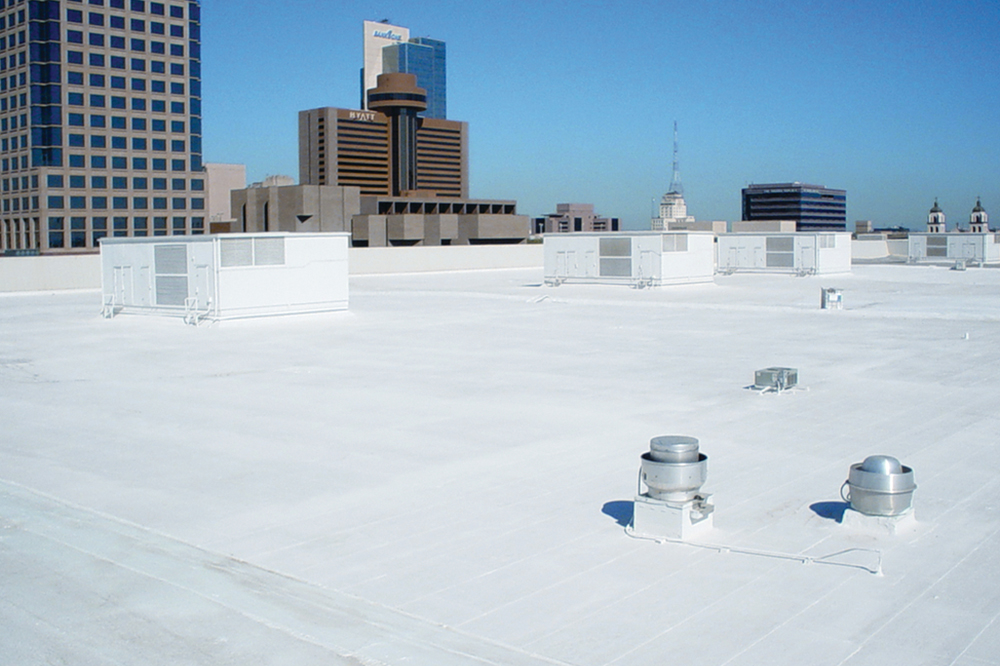
White fluid applied roofing reflects solar energy. On a July afternoon in Rockwall, a black roof can reach 160 to 180 degrees. A reflective white roof commonly reads 90 to 110 degrees. That drop reduces heat flow into the building. Expect cooling savings in the range of 5% to 20% depending on insulation level, building use, and HVAC performance. More important for many tenants is comfort: fewer hot zones under the roof and steadier indoor temperatures.
To protect these gains, schedule gentle cleanings. A low-pressure wash every 18 to 24 months keeps silicone and acrylic surfaces reflective. Dirt and pollen are heavy across the lakefront in spring; washing helps the roof do its work.
Permits, Code, and Insurance Considerations
Fluid applied roofing is typically considered maintenance or restoration, not a new roof, which can simplify local permitting. That said, if the scope includes replacing wet insulation, adding drains, or structural work, permits may be required. In Rockwall, commercial projects often need basic documentation even for restorations. A contractor who regularly works with the city will know the thresholds.
For insurance claims after hail, many carriers accept coatings as an approved repair when the damage is cosmetic and the substrate remains sound. If the roof is functionally damaged—punctures through the membrane—insurers may require replacement or a reinforced liquid system rather than a thin coating. An inspection report with photos and core data supports both the claim and the chosen repair path.
Why Many Rockwall Owners Choose Fluid Applied Roofing First
Local business owners value low disruption. Restaurants off Ridge Road cannot close for a week of tear-off. Churches and schools aim for summer windows and dependable schedules. Fluid systems respect those needs. Crews work around business hours, create minimal debris, and keep odors low compared to hot asphalt or solvent-heavy adhesives.
The second driver is lifecycle cost. If a $4.50 per square foot restoration delivers 12 years, and a $10 per square foot replacement delivers 25, the yearly costs are comparable. Add lower energy spend and fewer leaks during that period, and the restoration often leads.
What Can Go Wrong—and How to Avoid It
Common failures trace back to shortcuts. Coating over a dirty, chalky surface leads to peeling. Skipping reinforcement at penetrations leads to hairline cracks within a season. Ignoring birdbaths looks fine in May and leaks in September. Applying acrylic into ponding areas sets up early failure. A simple adhesion test and a few added hours of prep prevent these issues.
Product selection matters. A one-product-fits-all approach fails in Rockwall’s range of roof types. Silicone over silicone is fine; silicone over acrylic requires primer; acrylic over silicone fails. A contractor who knows those combinations and documents primers, mils, and cure times protects your investment.
Getting Specific: Rockwall Neighborhoods and Building Types
In older retail strips along Highway 66, metal panels with aging fasteners benefit from silicone systems with fastener encapsulation and reinforced seams. On tilt-wall warehouses near the Technology Park, single-ply membranes with sunburned surfaces respond well to primer plus a high-solids silicone or a PMMA system at penetrations for foot traffic zones. Lakeside properties see higher wind exposure; edge terminations and parapet details deserve extra reinforcement there.
Church campuses and schools around Yellowjacket Lane usually need quiet, clean work during limited windows. Fluid applied roofing fits those schedules while delivering a bright, cooler roof surface for large assembly areas.
A Quick Owner’s Checklist Before Calling a Contractor
- Note where leaks occur and after which storms.
- Look for standing water a day after rain, then measure depth with a ruler.
- Photograph seams, penetrations, and any rust or blistering.
- Gather past repair invoices and warranty paperwork, if any.
- Ask for an adhesion test and at least one core sample in the proposal.
These steps give a contractor enough context to propose the right fluid applied roofing plan or recommend replacement if that is smarter.
What to Expect From SCR, Inc. General Contractors
SCR, Inc. approaches fluid applied roofing as a building-specific solution. The team starts with a roof condition report, moisture checks, and adhesion tests, then outlines preparation, reinforcement details, film thickness, and warranty terms in plain language. Projects in Rockwall are scheduled around weather and business needs, with daily progress photos and punch-list closeout.
For owners who want budget control, SCR often prices two or three options: a restoration coating for good substrates, a reinforced liquid membrane for roofs with movement or texture, and a partial tear-off where wet insulation shows up. That clarity lets owners pick the right balance of cost, lifespan, and disruption.
Is a Liquid Membrane Suitable for Your Roof?
If the roof structure is sound, insulation is mostly dry, and drainage is reasonable, fluid applied roofing is usually a strong choice in Rockwall, TX. It delivers a seamless, UV-resistant surface, less downtime, and a predictable maintenance path. If cores show widespread moisture, if the deck is compromised, or if drainage fails across large areas, replacement or targeted rebuild should come first, with a fluid system as a future maintenance layer.
SCR, Inc. is available to evaluate roofs across Rockwall and nearby neighborhoods, from Lakeside Village to Caruth Lake and the commercial corridors off I-30. Request a roof assessment to see whether a fluid applied roofing system can extend your roof’s life, control energy costs, and reduce service calls. A short site visit and a few tests will tell you more than guesswork ever will.
SCR, Inc. General Contractors provides roofing services in Rockwall, TX. Our team handles roof installations, repairs, and insurance restoration for storm, fire, smoke, and water damage. With licensed all-line adjusters on staff, we understand insurance claims and help protect your rights. Since 1998, we’ve served homeowners and businesses across Rockwall County and the Dallas/Fort Worth area. Fully licensed and insured, we stand behind our work with a $10,000 quality guarantee as members of The Good Contractors List. If you need dependable roofing in Rockwall, call SCR, Inc. today. SCR, Inc. General Contractors
440 Silver Spur Trail Phone: (972) 839-6834 Website: https://scr247.com/
Rockwall,
TX
75032,
USA
SCR, Inc. General Contractors is a family-owned company based in Terrell, TX. Since 1998, we have provided expert roofing and insurance recovery restoration for wind and hail damage. Our experienced team, including former insurance professionals, understands coverage rights and works to protect clients during the claims process. We handle projects of all sizes, from residential homes to large commercial properties, and deliver reliable service backed by decades of experience. Contact us today for a free estimate and trusted restoration work in Terrell and across North Texas.